Ecommerce reporting guides
Most ecommerce reporting problems are definition problems: which date, which channel, which fee. These guides follow the order the work usually happens, from loading sources to numbers people act on.

01
Get your sources in one place
Which systems to connect and how to load them.
 The ecommerce data stack, mapped: 57 tools from storefront to dashboardA map of 57 tools from storefront to dashboard, with packaged and warehouse options side by side.
 9 ecommerce data sources worth connecting to a warehouseThe nine sources most brands end up needing, and what each one adds.
 How do you combine Shopify, Klaviyo, and Recharge data into one customer view?Join storefront, email, and subscription data into one customer view.
 How do you track a customer across Shopify, Klaviyo, Recharge, and your ad platforms?Identity and events tables for one customer timeline, with a working demo.
 Amazon Seller Fees in SP-API: Which Source to UseWhich SP-API report actually holds each Amazon fee.
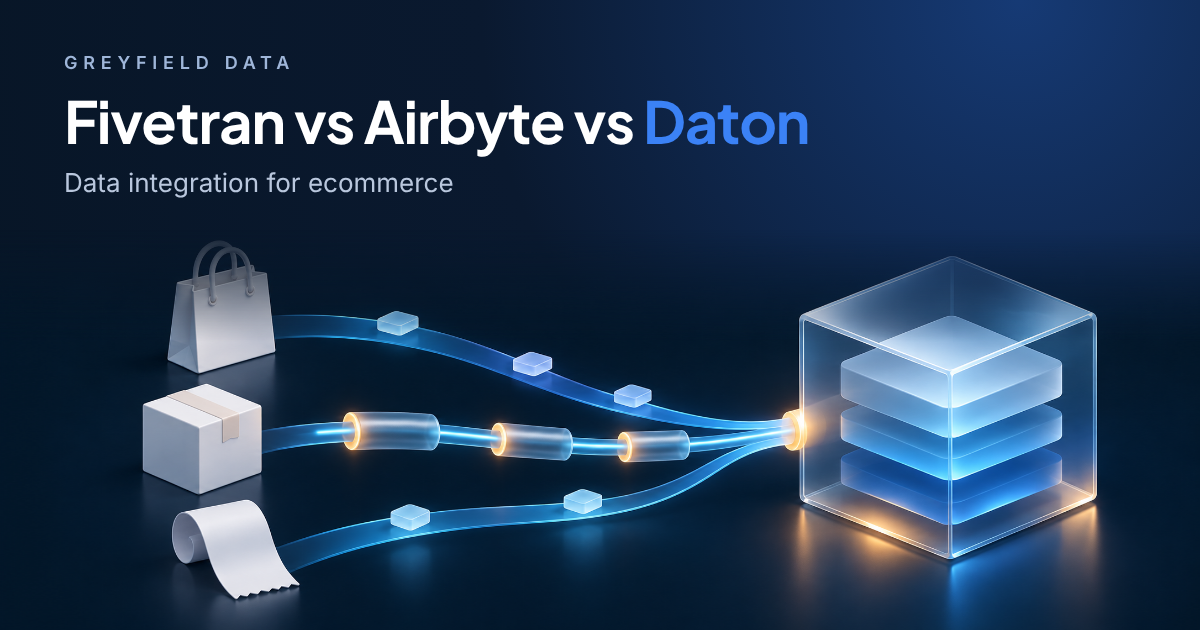 Fivetran vs Airbyte vs Daton for EcommerceChoosing a loader for ecommerce and ad platforms.
 BigQuery vs Snowflake vs Azure for EcommerceChoosing the warehouse those sources land in.
02
Make the numbers agree
The usual reasons two reports disagree, and how to fix each.
 Why do Shopify, finance, and marketing report different revenue numbers?Three teams, three revenue numbers, and the definitions behind each.
 Ecommerce semantic layer: a metric dictionary for gross sales to LTVA metric dictionary from gross sales to LTV, with grain, date, sources, owner, and a CSV template.
 Shopify refund date vs order date: why monthly sales differWhy monthly sales change depending on which date a refund uses.
 How to avoid double-counting Shopify, Amazon and TikTok ordersStop counting one order in two channels.
 Map SKUs across Shopify, Amazon and TikTok without breaking marginOne product, three SKU codes, and the mapping table that fixes margin.
 Why Amazon profit changes after a sale: estimated vs actual feesEstimated versus settled Amazon fees, and when profit stops moving.
03
Choose metrics that guide decisions
Definitions to agree on before building the dashboard.
 Daily ecommerce KPIs by channel: what belongs in the morning scorecard?What belongs in a morning scorecard, split by channel.
 Blended, attributed, incremental, and marginal CAC: which one guides the next dollar?Four kinds of CAC and which one should guide the next dollar.
 How do you calculate contribution margin LTV by acquisition channel?Lifetime value on contribution margin, split by channel.
 A customer retention dashboard in Sigma, in five reportsRepeat rate, frequency, product paths, and reactivation, each defined by who it includes.
 What can you do with business numbers you trust?The decisions that open up once reporting is reliable.
04
Choose a data partner
Shortlists of firms that do this work, with how to pick between them.
05
Model and report
How the warehouse is organized and how long it takes to get right.
 Bronze, silver, and gold data layers explained with an ecommerce orderRaw, cleaned, and reporting layers, shown with a single order.
 Why does building reliable ecommerce reporting take time?Why connecting a source is the start, not the finish.
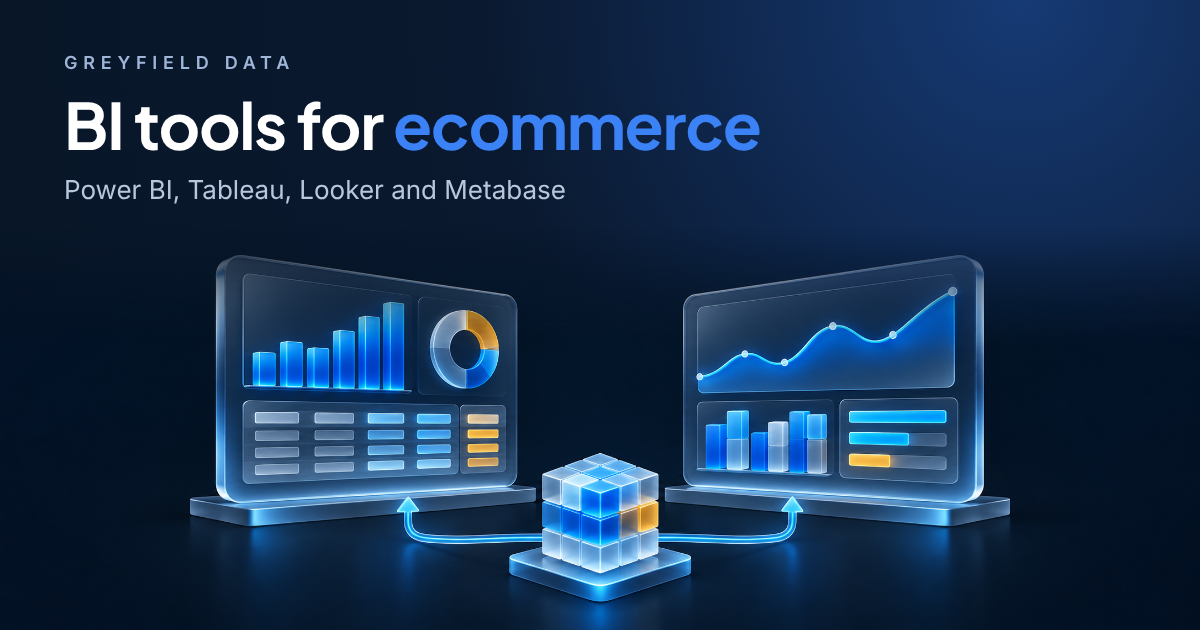 Power BI vs Tableau vs Looker vs Metabase for EcommerceChoosing a BI tool for ecommerce dashboards.
Comparisons
Where another tool is the better fit, these pages say so.
- Triple Whale vs a custom data warehouse: which one does your brand need?
- Polar Analytics vs a custom data warehouse: managed Snowflake or your own?
- Lifetimely vs a custom data warehouse: profit and LTV for Shopify brands
- Sellerboard vs a custom data warehouse: Amazon profit, or every channel?
- BeProfit vs a custom data warehouse: Shopify profit app or your own model?
- TrueProfit vs a custom data warehouse: live net profit or one model for every channel?
- Supermetrics vs a custom data warehouse: a data pipe or a finished model?
- Improvado vs a custom data warehouse: enterprise marketing data or a commerce model?
- Northbeam vs a custom data warehouse: attribution or the full P&L?
- Glew vs a custom data warehouse: hosted ecommerce BI or your own Snowflake?
- Saras Analytics (Daton, Pulse, iQ) vs a custom data warehouse
- Klar vs a custom data warehouse: contribution margin out of the box or your own model?
- Windsor.ai vs a custom data warehouse: cheap connectors or a finished model?
- Funnel vs a custom data warehouse: marketing data hub or commerce model?
- Peel vs a custom data warehouse: retention analytics or the whole business?
- Daasity vs a custom data warehouse: packaged commerce models or built for you?
- Shopify Analytics vs a custom data warehouse: when built-in reports stop being enough
Common questions
Why does Shopify revenue not match what finance reports?
Usually because of timing and definitions: refunds, discounts, taxes, shipping, and which date an order belongs to. The revenue and refund guides above walk through each difference.
Can a packaged ecommerce analytics app replace a warehouse?
For many smaller brands, yes. A warehouse earns its cost when you need sources the app does not support, your own margin and fee logic, or one model shared by several tools. The comparisons below cover specific apps.
What should be connected first?
The storefront and marketplace orders, then fees and costs, then marketing spend. Revenue that matches the books comes before attribution.