Do you need AI to predict infusion claim denials?
What an infusion denial prediction model needs, how to rank claims by dollars at risk, and why clean claim history matters more than the algorithm.

Written by Linus Tse, founder of Greyfield Data
· 9 min read
On this page 10 sections
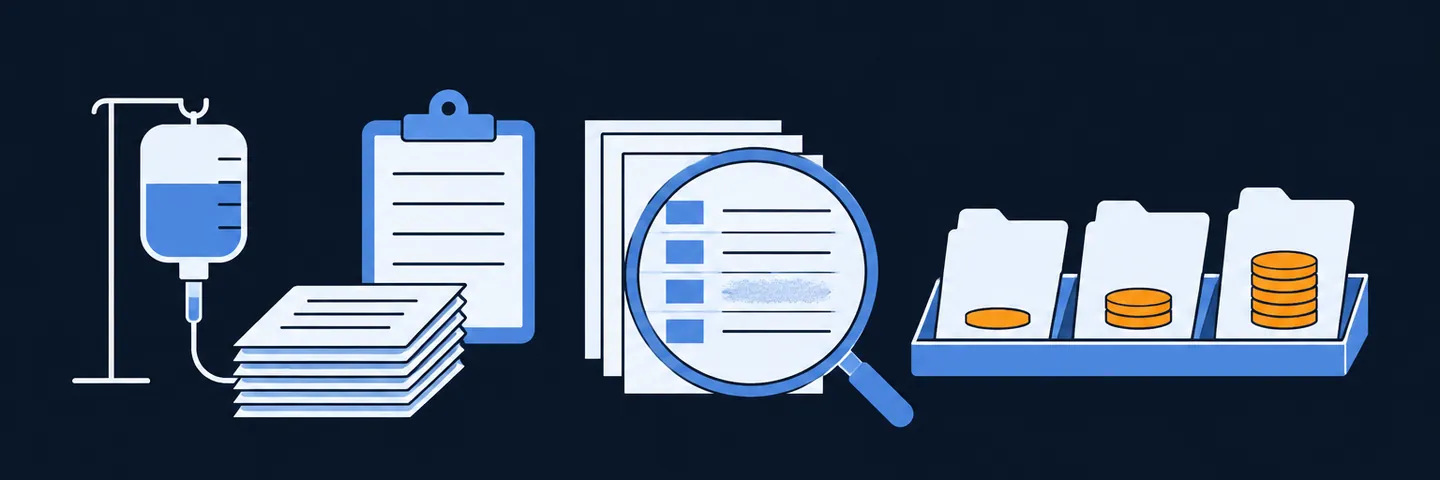
Most infusion providers don't need AI to predict denials yet. They need clean claim-line history tied back to the order, authorization, and administration, plus a few rules that catch the denials they already know about. A model starts to earn its place once those rules stop finding new problems and you have enough history to learn from.
I've built the data underneath this kind of work. That means order, authorization, appointment, and billing data from an infusion EHR, joined to the claims and payments that came out the other end. If you want a review of whether your data is ready for denial scoring, that is part of the infusion analytics work I do. If you haven't yet grouped your denials by root cause, start with why your infusion denial rate is high, which is the step before prediction.
Key takeaways
- A denial prediction model needs claim-line history with outcomes, joined to the authorization, eligibility, order, and administration behind each line. Without that join, it learns your data gaps.
- Rank work by dollars at risk (expected reimbursement times probability of denial), not by probability alone, so a small team works the claims that matter most.
- Rules come first. Expired authorization, missing waste modifier, and visit before the allowed interval are known causes you can check without a model.
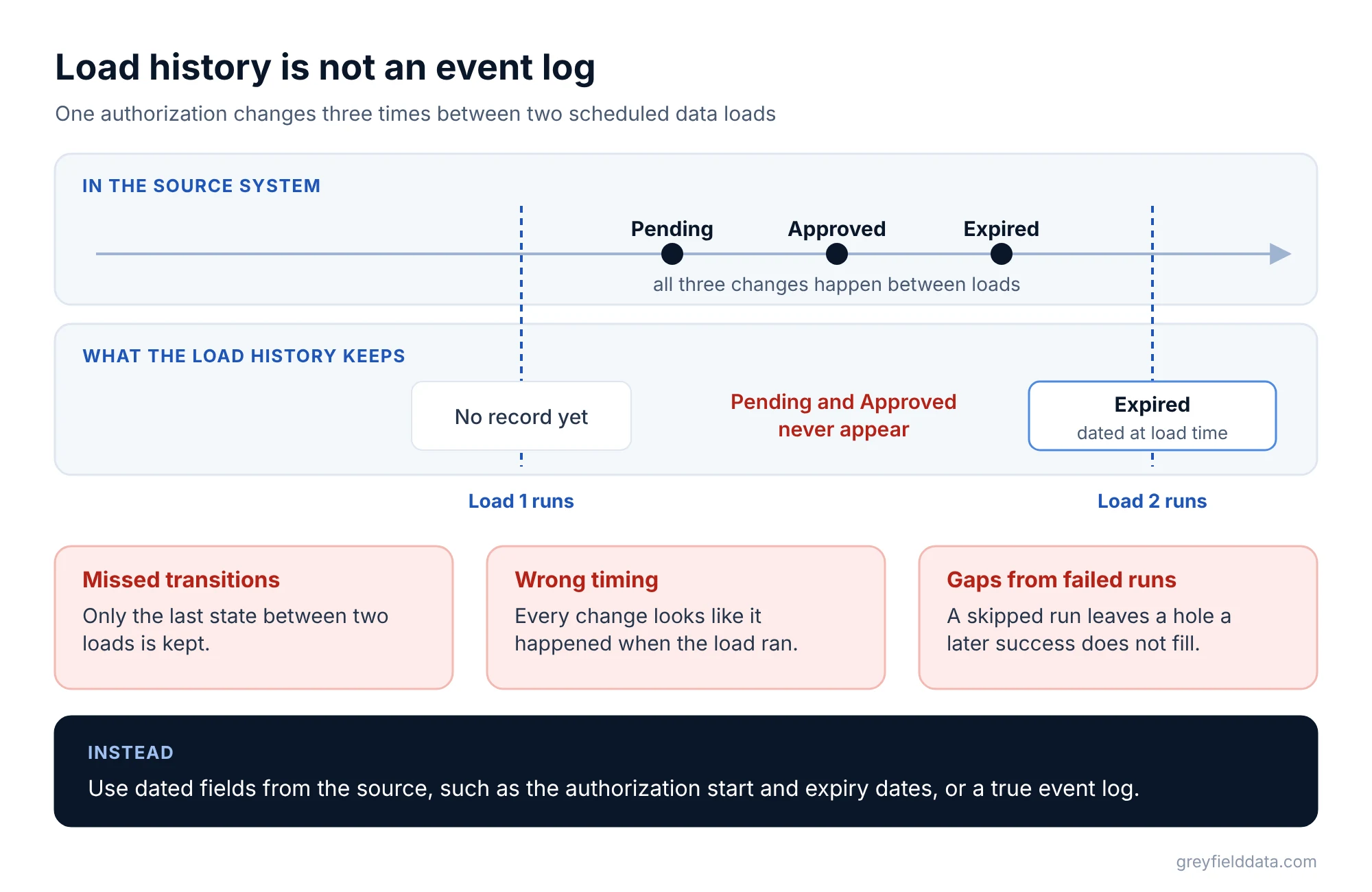
- Change history captured by a scheduled data load is not a full event log. It records what the load saw, when it ran, so it can't reconstruct every status change.
- No one can promise a denial reduction percentage before seeing your data. Treat any vendor number as a claim to test on your own claims.
What does a denial prediction model actually do?
A denial prediction model gives each claim, or each claim line, a probability that the payer will deny it, before you submit it. Staff then review the riskiest claims first and fix what they can, such as a missing modifier or an authorization that needs updating.
The model does not fix anything itself. Its value depends entirely on whether someone acts on the score before the claim goes out. Where it sits among other uses of AI is covered in the infusion data maturity guide, which puts prediction at the last of five stages.
What data does a denial model need?
A denial model needs past claims with their outcomes, plus the facts that existed before submission. The outcome comes from remittance (835) data: paid, denied, or partially denied, with the claim adjustment reason code. The inputs come from everywhere upstream.
| Input | Typical source | Why it matters |
|---|---|---|
| Claim line outcome and reason code | 835 remittance | The thing you are predicting. CARC codes say why. |
| Payer and plan | Billing system, eligibility response | Rules differ by payer and plan |
| Drug (HCPCS) and units billed | Claim | Some drugs and unit counts draw more review |
| Waste units and modifier | Claim, administration record | Missing or inconsistent waste lines are a common edit; see JW and JZ modifiers |
| Authorization status and dates at time of service | Authorization record | Treating outside an authorization is one of the costliest denials |
| Eligibility check result and date | Eligibility (270/271) response | Coverage that changed since the last check |
| Days since the previous dose | Administration history | Dosing earlier than the allowed interval |
| Diagnosis codes | Order | Medical necessity edits |
| Site, rendering and ordering provider | Order and claim | Enrollment and credentialing problems |
| Days from service to submission | Claim | Late claims and timely filing |
The hard part is not the list. It is joining these at the right grain. A claim line for a drug has to tie back to one administration, which ties to one order, which ties to the authorization that was valid on the date of service. A single infusion data warehouse is usually where that join lives.
Why do clean grain and history come first?
Grain comes first because a model trained on duplicated or mismatched rows learns the duplicates. If an order repeats once per appointment, and you join authorization status at order level, every appointment inherits the latest status, including ones given before that authorization existed. The model then "learns" that authorized visits get denied.
I see this pattern often in infusion data. The duplicate rows guide shows how a one-to-many join repeats rows, and the orders vs appointments guide shows why the base table decides what one row means.
History comes next. You need enough past claims, with outcomes, to see patterns by payer and drug. A center with a few hundred claims a month and a handful of payers will have thin data for most payer and drug combinations, and the model will be guessing for the rare ones.
Is your data load's change history a full record of events?
No. When a scheduled data load keeps history (often called a type 2 slowly changing dimension), it stores a new version of a record each time the load sees a change. The timestamp is when the load ran, not when the change happened in the source system.
That matters for denial modeling in three ways.
- Missed transitions. If an authorization went from pending to approved to expired between two loads, the history shows only the last state.
- Wrong timing. If the load runs nightly, every change looks like it happened at load time. Turnaround times computed from that history are approximate at best.
- Gaps from failed runs. A load that fails and is skipped leaves a hole. A successful run later does not prove every window was captured.
To know the authorization status on the date of service, you need dated fields from the source, such as the start and expiry dates on the authorization. A true event log also works. Load history alone does not.
How do you score claims by dollars at risk?
Score each claim by expected reimbursement times the probability of denial. That gives the dollars at risk, which is what a small team should sort by.
Probability alone sends staff to small claims that are likely to deny. Dollars at risk sends them to the claims where a fix is worth the most. The same idea works for rejected authorizations, as the prior authorization denials by payer guide shows.
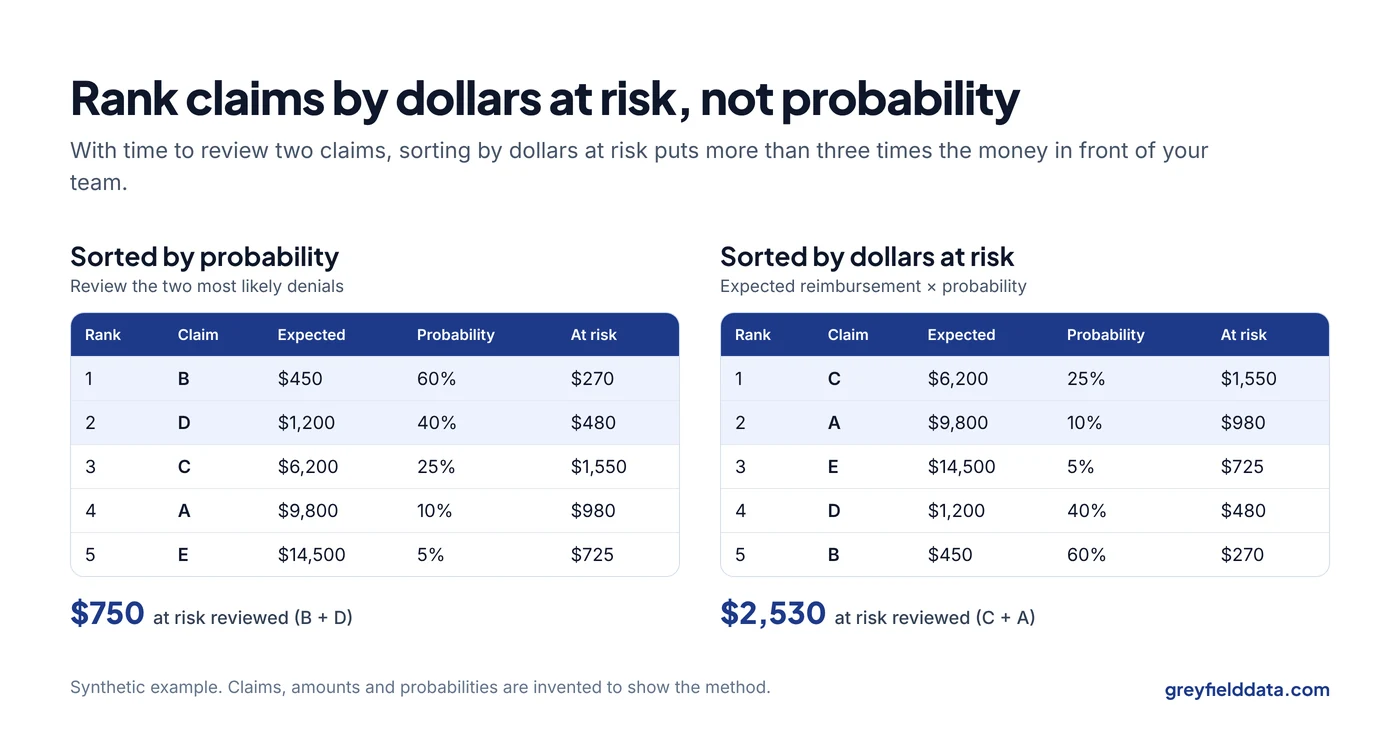
Here is the synthetic example in the image, with the math written out:
| Claim | Expected reimbursement | Denial probability | Dollars at risk |
|---|---|---|---|
| A | $9,800 | 10% | $980 |
| B | $450 | 60% | $270 |
| C | $6,200 | 25% | $1,550 |
| D | $1,200 | 40% | $480 |
| E | $14,500 | 5% | $725 |
Synthetic data. Claims, amounts, and probabilities are invented to show the method.
If your team can review two claims before submission:
- By probability: B and D. Dollars at risk reviewed: $270 + $480 = $750.
- By dollars at risk: C and A. Dollars at risk reviewed: $1,550 + $980 = $2,530.
The probabilities don't have to come from a machine learning model. A historical denial rate by payer and drug, or a rule that flags known problems, gives you a usable first estimate.
Should you start with rules or a model?
Start with rules. Many infusion denials have causes you can check directly before submission:
- Authorization expired, or units exceed what was approved, on the date of service. The expiring authorizations report catches these before the visit.
- Eligibility not re-checked since the plan year changed.
- Waste documented but no waste line, or a drug line missing the required modifier.
- Dose given earlier than the allowed interval since the last one.
- Diagnosis code not on the payer's covered list for the drug.
Each of these is an exception list, not a model. The red flag reports guide shows the logic for several of them. Once the rules catch the known causes and denials still come through, a model can look for combinations you haven't written rules for.
What denial reduction can you expect?
No honest answer exists before someone looks at your claims. Results depend on your current denial mix, how many denials are preventable before submission, and whether staff act on the scores.
When a vendor quotes a percentage reduction, ask for the baseline period, the denial definition (claim or line, count or dollars), how many claims were scored, and whether the comparison controls for payer mix changes. Then test the tool on your own historical claims before you sign. The guide to AI in infusion operations has a fuller vendor checklist.
What to do next
Pull a year of denied claim lines, group them by reason code, and mark which ones a rule could have caught before submission. That list tells you whether you need a model or a few weekly exception reports.
The revenue leakage guide shows where denials sit among the other leaks, and the buy-and-bill margin calculator shows what one lost drug claim costs you. The infusion revenue leakage calculator adds up the monthly total, and the infusion analytics resource hub links every related guide. If you want help joining claims to orders and authorizations so any of this is possible, book a call with me.
Frequently asked questions
Does an infusion provider need a data lake before building a denial prediction model?
No. You need claim-line history with outcomes joined to the authorization, eligibility, and administration behind each line. That can live in a modest database or warehouse; the join and the grain matter more than the platform.
What claims data is used to train a denial prediction model?
Past claim lines with their remittance outcome and reason codes, plus what was known before submission: payer and plan, drug and units, waste lines, authorization dates, eligibility result, dosing interval, diagnosis, site, and provider.
How does denial risk scoring work in an infusion billing workflow?
Each claim gets a probability of denial before submission. Multiply by expected reimbursement to get dollars at risk, sort by that, and have staff review the top of the list and fix what they can before the claim goes out.
What denial rate reduction can infusion providers expect from AI-assisted claim review?
It can't be known in advance. It depends on how many of your denials are preventable before submission and whether staff act on the scores. Test any tool on your own past claims before relying on a vendor's number.
Part of the Infusion analytics guides, a reading path through related articles.
Linus Tse
Founder of Greyfield Data. Built 400+ dashboards. Certified in Sigma, Snowflake, Tableau, and Power BI.
About Linus